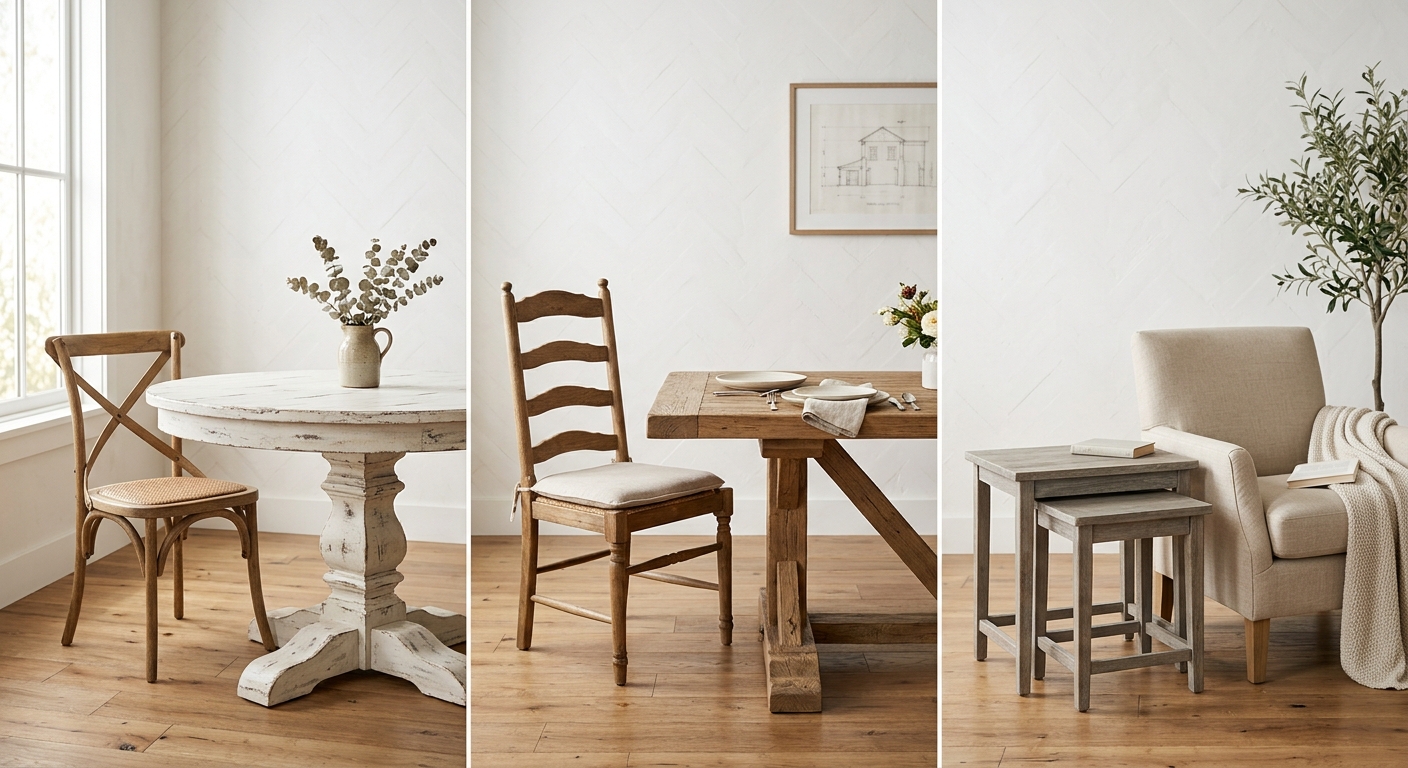
A handcrafted farmhouse table is an investment meant to last generations. With proper care, your solid wood table will develop a richer patina over time while maintaining its structural integrity and beauty. Here is everything you need to know about caring for your farmhouse table.
Daily Cleaning
For everyday cleaning, simply wipe your table with a soft, dry microfiber cloth. This removes dust and prevents buildup without damaging the finish. For spills or sticky spots, dampen the cloth slightly with warm water — never soaking wet — and wipe gently. Always dry the surface immediately with a clean cloth.
Avoid using harsh chemical cleaners, ammonia-based products, or abrasive sponges. These can strip the distressed finish and damage the wood beneath. A mild soap solution (one drop of dish soap in a cup of warm water) is safe for occasional deeper cleaning.
Protecting the Finish
Your table's distressed finish is what gives it that authentic farmhouse character. To protect it:
- Use coasters under all drinks to prevent water rings
- Place trivets or hot pads under hot dishes — never set hot pans directly on the wood
- Use placemats and tablecloths during meals to reduce wear
- Avoid placing the table in direct sunlight, which can fade the finish over time
- Keep the table away from heating vents and radiators to prevent drying and cracking
Seasonal Maintenance
Twice a year — ideally in spring and fall — give your table a deeper treatment. Apply a thin coat of food-safe mineral oil or beeswax furniture wax using a soft cloth, working in the direction of the wood grain. Let it sit for 15 minutes, then buff with a clean cloth. This nourishes the wood, enhances the grain, and adds a protective layer.
For distressed and reclaimed wood finishes, this oiling process is especially important. It keeps the wood from drying out and helps maintain the rich, varied tones that make each piece unique.
Dealing with Scratches
Minor scratches are part of the character of a farmhouse table and often blend in naturally with the distressed finish. For deeper scratches, rub a walnut along the scratch — the natural oils help disguise the mark. Alternatively, use a wood touch-up marker that matches your table's finish color.
Humidity Control
Solid wood expands and contracts with humidity changes. In dry winter months, consider using a humidifier in your dining room to prevent the wood from cracking. In humid summer months, air conditioning helps prevent excessive swelling. Maintaining a relative humidity between 35-55% is ideal for solid wood furniture.
What to Avoid
- Never use furniture polish with silicone — it creates a buildup that is difficult to remove
- Do not drag heavy objects across the surface
- Avoid standing water on the table — wipe spills immediately
- Do not use vinegar or acidic cleaners on finished wood
With these simple care practices, your Farmhouse Chic Table will remain a beautiful centerpiece in your home for decades. The wood will age gracefully, developing character marks that tell the story of countless family meals, celebrations, and everyday moments shared around it.
Have questions about caring for your table? Contact us at info@farmhousechictables.com or call +1 (704) 492-5128. We're happy to help.